Although it would be impossible to explain all the
 symbols of the painting in this short commentary, a quick general glimpse is a good start.
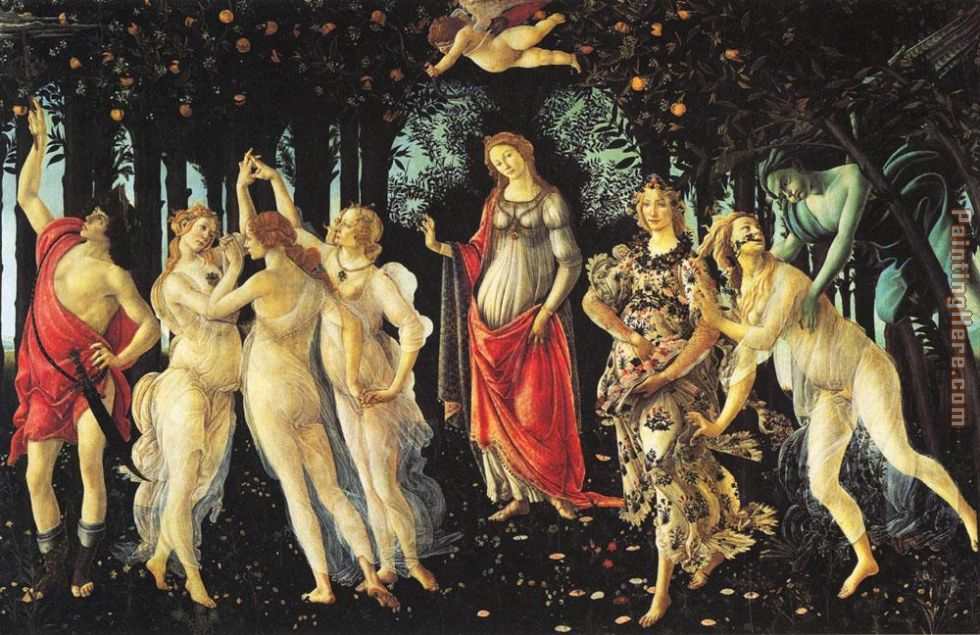
The scene takes place in the Garden of the Hesperides, which belonged to Venus. At the time Botticelli created this painting, the “golden apples” were thought to have been scientifically explained as oranges. In the center is Venus herself, and above her hovers Cupid, readying an arrow for one of the three Graces. Who will actually be hit is uncertain: not only is Cupid blindfolded, but the Graces are dancing a rondel—in effect, they are playing a game of roulette with Cupid. On the far left stands Mercury as guard, dispelling clouds (forbidden from the garden lest they disturb its eternal spring) with his caduceus staff, which is now a popular medical symbol.
To the right, Botticelli depicts two separate moments in Ovid's narrative of Chloris and Zephyr. Zephyr, the wind of spring, seizes the virgin nymph Chloris as his wife. Regretting his violence, he transforms her into Flora, who is depicted covered in flowers between the figures of Chloris and Venus. According to the story, Zephyr’s gift includes a beautiful garden in which eternal spring reigns. This is why the clothes of the two women, who also do not appear to notice each other, are being blown in different directions.
